Collectors

Most of the carol books from the 19th century were written by compilers rather than collectors – musicians who made new arrangements of existing carol music or poems rather than going out to find new carols ‘in the field’. We shall focus now on a few of these ‘field’ collectors:
Davies Gilbert (1767-1839) was born Davies Giddy, son of Rev. Edward Giddy, a curate and then vicar for many years at St Erth, near St Ives in West Cornwall. Davies changed his surname in 1817 so that his wife could inherit a family legacy. He was an MP for Helston and Bodmin constituencies between 1804 and 1832, so he was often away in London for long stretches. However, he was a proud Cornishman and in 1816 he decided to rescue old Cornish carols that he remembered from his youth. He commissioned local people to find and note down these carols,1 publishing 8 carols with tunes in Some ancient Christmas carols: with the tunes to which they were formerly sung (1822). He expanded this the following year in a second edition of 20 carols including the first ever version of The First Nowell.
Gilbert wrote no other carol books and became heavily involved in a range of scientific and engineering projects, culminating in his election as President of the Royal Society in 1827.
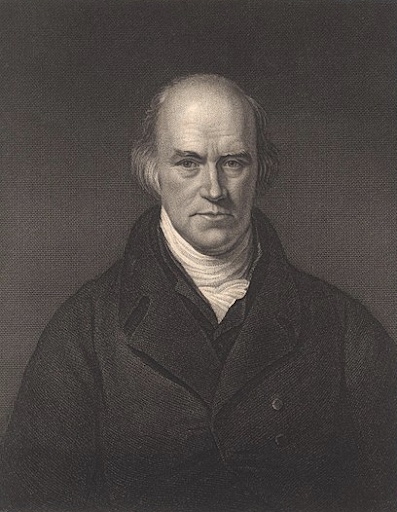
William Sandys (1792-1874) was by profession a London solicitor but was an enthusiastic amateur musician and antiquary.2 He had Cornish roots, however, and was perhaps inspired by Gilbert’s carol books. The two men were distantly related and may have shared carols information. Sandys’ book Christmas Carols Ancient and Modern came out in 1833 (London: Richard Beckley). It contained 34 medieval or early carols; 40 modern carols; and 6 European carols – a total of 80, of which he supplied tunes for 15). It was an altogether more ambitious book than Gilbert’s with a long introduction of 144 pages, roaming through all manner of Christmas customs and folklore. On p61 Sandys affirmed that his carols were ‘still used in the West of England’ and this suggests some local exploration by him of carols practice in Cornwall. Like Gilbert, this exploration may have involved intermediaries rather than personal collecting. Interestingly, 17 out of Sandys’ 40 modern carols were also contained in the ‘Hutchens book’ belonging to Gilbert; this may just be coincidence (a common stock of carols) but a close comparison of texts may indicate direct borrowing. Sandys himself did not cite his sources nor acknowledge Gilbert beyond a cursory mention of him on p132 of his Introduction.
Sandys went on to produce a volume of old ‘Festive songs’ for the Percy Society in 1848 and an updated book Christmastide its history, festivities and carols (London: John Russell Smith, 1852). His work was referenced by subsequent compilers, particularly for his tunes of The First Nowell and God rest ye merry gentlemen.
After the initial efforts of Gilbert and Sandys to identify and publish some folk-carols, there was a gap of several decades before anyone rediscovered that interest - the plethora of ‘composed carols’ otherwise diverted the attention of musicians. The foundation of the Folk-Song Society in 1898, however, led to the unearthing of a few ‘old’ carols, but some of the Edwardian collectors were more interested in carols than others. Lucy Broadwood’s book English Traditional Songs and Carols (London: Boosey & Co, 1908) had just one Christmas carol in it out of 48 songs, namely ‘King Pharoah’ (pp74-75), which she obtained from the gypsy family named Goby in Sussex in 1893. It is a re-telling of ‘The Carnal and the Crane’ (Child ballad 55, Roud 306), which contains within it the miracle story of ‘King Herod and the cock’. King Herod disbelieves the Wise Men about the birth of a new king, whereupon the cooked capon in the dish before him rises up and crows.3
Frank Kidson had no carols in his Traditional Tunes book (Oxford: Taphouse, 1891); Anne Gilchrist gave lectures on the subject of Christmas carols but collected little herself. Rev. Baring-Gould likewise collected folk-songs widely but his Songs and Ballads of the West book (London: Methuen, 1889) had no Christmas carols in it. However, he did carry out translations of two Basque carols, collected by Frenchman Charles Bordes in 1890.4 The carols were The Angel Gabriel from heaven came and Sing Lullaby, whose traditional melodies were harmonised by Edgar Pettman and jointly published in The University Carol Book (1922).5
But the three collectors who took an especial interest in carols were as follows:-
Ella Leather (née Smith, 1874-1928) was the daughter of a farming family in Dilwyn, Herefordshire and in 1893 she married a solicitor in nearby Weobley. Ella absorbed herself in the folklore and customs of the area, publishing her iconic book The Folklore of Herefordshire in 1912. She began picking up a few carols and a lot of folksongs from local singers from 1904 onwards,6 joining both the Folk-Lore Society and the Folk-Song Society in 1905. She was primarily assisted in her task by her governess Miss Annie Webb,7 who noted the music, while Ella sometimes wrote down the words. Annie Webb noted altogether 34 folksongs,8 16 from William Colcombe, an occasional inmate of the Weobley Union workhouse. There were four carols among Webb’s efforts and these were published in the 1905 Journal of the Folk-Song Society (pp115-134):
Come all ye faithful Christians (Roud 815)
There is a Fountain of Christ’s blood (Roud 663)
Christmas now is drawing near (Roud 808)
The Moon shines bright (Roud 702)
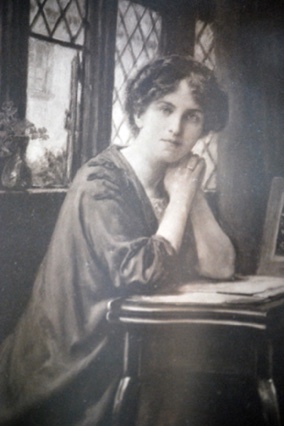
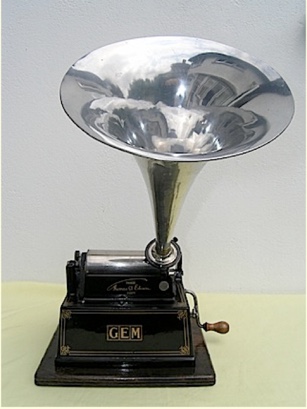
Lucy Broadwood, secretary of the Folk-Song Society, then intervened to secure the help of Ralph Vaughan Williams to record and transcribe further songs for Ella on the Society's newly purchased Edison phonograph. Ella made numerous recordings that were sent to Vaughan Williams in London, where he could transcribe the songs at his leisure. Only one carol went through this process and survived – ‘There is a fountain of Christ’s blood’, a new recording from a Mrs Esther Smith. It can still be heard online at VWML but only faintly!9
The close collaboration between Leather and Vaughan Williams10 had several outcomes – first, in the 1910 Journal of the Folk-Song Society Ella Leather introduced eleven more ‘Carols from Herefordshire’ which included The Truth sent from above (Roud 2109). Vaughan Williams then used this carol in 1912 in his choral and orchestral work Fantasia on Christmas Carols; finally, they jointly published Twelve Traditional Carols from Herefordshire (London: Stainer & Bell, 1920). The 12 carols (arranged for SATB) were:-
The Holy Well (2 versions); Christmas now is drawing near; Joseph and Mary; The Angel Gabriel; God rest you merry gentlemen; New Year’s carol; On Christmas Day; Dives and Lazarus; The Miraculous Harvest; The Saviour’s Love; and The Seven Virgins.
Ella Leather’s considerable contribution to carols through the good offices of Vaughan Williams was complimented by her role in the collection of several ‘morris’ dances, which she achieved with the help this time of Cecil Sharp.11
Cecil Sharp (1859-1924) learned violin and piano from an early age but did not receive more advanced formal training.12 He became a music teacher and lecturer in London but then stumbled upon ‘live’ singing of folk songs in 1903 in Somerset. He did 20 field trips to Somerset in his holidays, noting down hundreds of folksongs including several wassail songs. In 1906, he came across a variant of ‘God rest ye merry gentlemen’ called Come all you worthy gentlemen sung by Henry Rapsey in Bridgwater. It was a good tune in a major key rather than the usual minor key. Rapsey, a retired sailor, said that he learned the carol from his mother and used to sing it in company with other boys in the streets of Bridgwater at Christmas time.13 Vaughan Williams would use Rapsey’s tune later in his Fantasia on Christmas Carols in 1912 (see below).
Sharp did also collect extensively outside Somerset and in 1907 he found two carols from a singer, Henry Thomas, in Chipping Sodbury, Gloucestershire. These were: Come all you true good Christians (Roud 815) and A Virgin unspotted. Further expeditions to Gloucestershire in 1909 unearthed the variant of The Holly and the Ivy which we sing today, as well as a version of the popular Gloucestershire Wassail song. Sharp selected 21 carols, arranged with piano accompaniment, to go into his book English Folk-Carols (London: Novello, 1911).14
Annoyingly for Sharp, he then discovered a small treasure trove of carols in the Camborne area of Cornwall in 1913 and a further clutch of carols at Ross Union workhouse in Herefordshire in 1921. These were never published.15
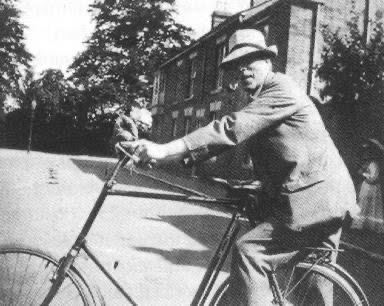
Ralph Vaughan Williams (1872-1958) studied at both Trinity College, Cambridge and the Royal College of Music, where he became good friends with Gustav Holst. His interest in folksongs began in December 1903 and he joined the Folk-Song Society soon afterwards. The first carol that he collected was ‘On Christmas Night all Christians sing’ from Mrs Harriet Verrall of Monk’s Gate, near Horsham, Sussex on 24 May 1904.16 Although written in the 17th century in Ireland, the song had a forgettable tune in carol books until Vaughan Williams used Mrs Verrall’s tune in his Fantasia on Christmas Carols in 1912,17 publishing it again in the Eight Traditional carols book in 1919 (Stainer & Bell).18 It became known as ‘The Sussex Carol’ when Vaughan Williams, as co-editor, included it as such in the first Oxford Book of Carols in 1928.
Vaughan Williams had previously used such editorial powers in The English Hymnal when he paired a folk tune (The Ploughboy’s Dream, collected by him in 1903) with the American text of O Little Town of Bethlehem (see ‘Composed Carols’ section). Whereas Cecil Sharp lacked the confidence and creative skills to arrange carols (and folksongs) for choral or orchestral use (Sharp’s 1911 book was for solo voice and piano accompaniment), Vaughan Williams was able to develop his carols material into SATB arrangements19 and orchestral pieces.
1 A book with 38 Christmas carols, collected in West Cornwall and known as the ‘Hutchens Ms’ is held at the Kresen Kernow records office in Redruth (ref DG/92) along with Gilbert’s other carol notes and papers.
2 Sandys was a fellow of the Society of Antiquaries.
3 'King Herod and the cock’ is an Apocryphal story from ‘The Gospel of Nicodemus’. See Oxford Book of Carols no.54. Broadwood’s book does contain The Moon Shines Bright(originally a May-Day carol) and two Mummers’ Play songs, none of which are very Christmasy.
4 Charles Bordes (1863-1909) was a French composer, commissioned by the French Ministry of Education to carry out an ethnomusicological survey in the Basque region between 1889 and 1890. He began to publish his findings in 1893.
5 Pettman (1866-1943) was a composer and organist. The two carols are nos. 196, 197 in The New Oxford Book of Carols.
6 Ella sent a first batch of songs to Lucy Broadwood, the editor of the Journal of the Folk-Song Society in January 1905.
7 Annie Mary Webb was born in 1882, daughter of a successful butcher in Bagshot, Surrey. She probably joined the Leather family as governess after Ella had her third son Godfrey in 1902. Ella had previously lost her second son Geoffrey, aged 4, in 1901, which was no doubt a very difficult year for her. Annie probably left the employment of Ella Leather in late 1906, as her name is not credited as collector beyond that year. She was a governess in Ashtead, Surrey in the 1911 census and was married in London in August 1912 to John Brockman, hotel proprietor.
8 See King, Andrew The Ella Mary Leather Manuscript Collection in The Folk Music Journal vol 10, no.5 (2010 pp786-812).
9 The surviving cylinder is C37/1585 at vwml.org. Click ‘Archives catalogue’ and scroll down to CYL section.
10 Vaughan-Williams did pay numerous personal visits to Mrs Leather in Aug 1908, Aug 1909, Oct 1910 and Sept 1912 (King p780).
11 In her book The Folk-lore of Herefordshire (Hereford: Jakeman & Carver, 1912) Ella Leather presented the morris dances pp. 130-137 and the carols pp.180-197. Some of these dances we now call ‘Border’ morris, but this is a modern term, not used by Leather. Sharp visited Mrs Leather in December 1909. See Sutcliffe, David Cecil Sharp new biography(The Ballad Partners, 2023 pp.216-217).
12 The Royal College of Music did not open until 1883 and the existing Royal Academy of Music trained only a modest number of professional musicians.
13 Rapsey’s carol was published in Sharp’s Folk-Songs from Somerset series 5 (notes p91). For profile of Rapsey, see www.cecilsharpspeople.org.uk. Rapsey was singing the carol in the 1850s and his mother in the 1820s.
14 Sharp’s English Folk-Carols is viewable online at the Internet Archive. In total he collected 145 carol variant tunes in England.
15 The Camborne carols are CJS2/10/2821-2852 at vwml; the Ross songs are CJS2/10/4825-4856.
16 Vaughan Williams’ notes of the carol are RVW2/2/102 at vwml.
17 The Fantasia on Christmas Carols is a 12 minute choral and orchestral work, first performed at Hereford Cathedral on 12 September 1912. The three carols featured were: The Truth sent from above, Come all you worthy gentlemen and On Christmas Night all christians sing. It was dedicated to Cecil Sharp.
18 The other Eight Traditional carols were: And All in the Morning (Derbyshire); The Twelve Apostles (Staffordshire); Down in Yon Forest (Derbyshire); May-Day Carol(Cambridgeshire); The Truth Sent from Above (Herefordshire); The Birth of the Saviour (Derbyshire); and Wassail Song (Yorkshire). They were set for SATB and also solo voice and piano.
19 Ralph Vaughan Williams and fellow composer and co-editor Martin Shaw were able to produce SATB arrangements for the majority of the 197 carols in the first Oxford Book of Carols.